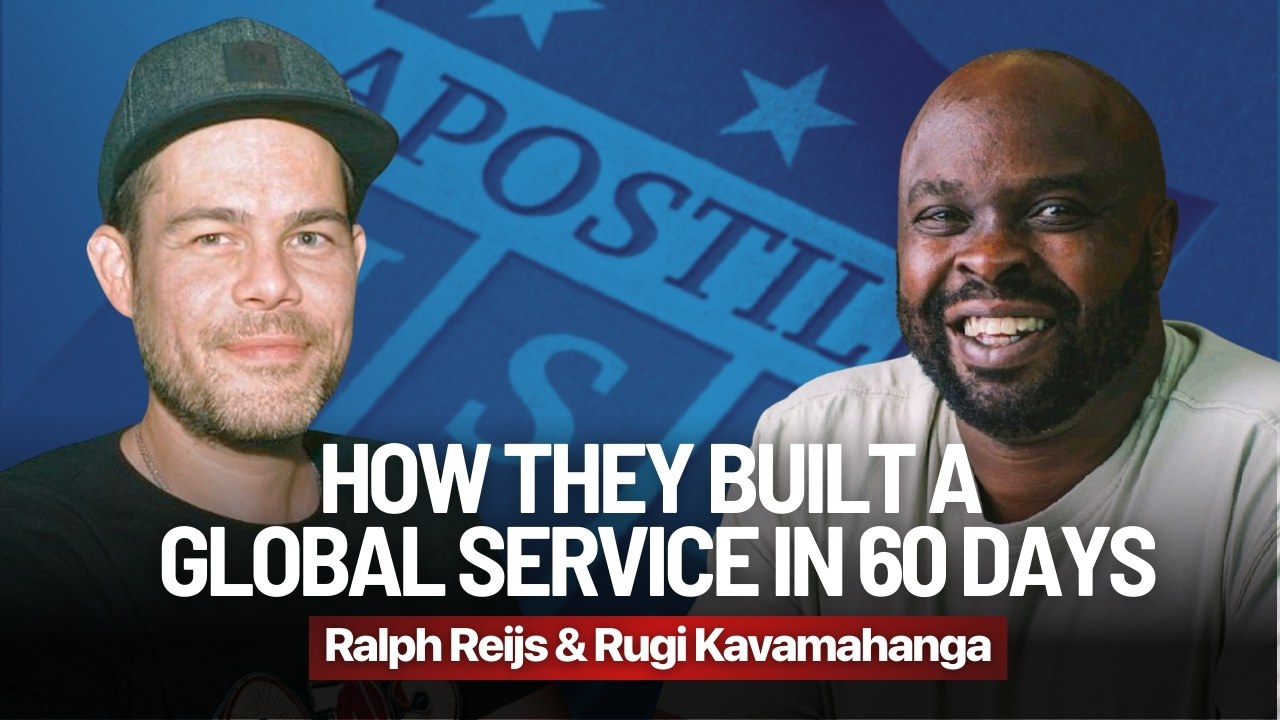
Rugi Kavamahanga and Ralph Reijs, co-founders of Apostille-USA, are transforming one of the most overlooked pain points for Americans living, working, and studying abroad: the process of obtaining apostilles quickly, accurately, and reliably. Frustrated by slow, outdated, and inconsistent services, the duo launched a secure, automated platform that reached profitability in under two months.
Together with CTO Ralph Reijs, CEO Rugi Kavamahanga says they built Apostille-USA, a tech-enabled platform designed to streamline document authentication across borders on the latest episode of The Small Business Show.
The idea for Apostille-USA came from Kavamahanga’s own struggles in Brazil, where he faced repetitive paperwork, poor customer service, and unreliable providers while trying to get a visa. A conversation with his Brazilian lawyer revealed that the challenge was not unique, but rather immigration lawyers and clients around the world were grappling with the same problem, often with high stakes.
Kavamahanga and Reijs started small, with just $2,500, they leveraged affiliate partnerships with immigration lawyers to generate revenue from day one. Kavamahanga identified the top 20 countries visited by Americans, scraped Google to find 2,000 law firms, and reached out to offer the service. The first affiliate was his own lawyer, and within months, the company secured 100 affiliates across 20 countries.
The platform emphasizes automation, accuracy, compliance, and human oversight. Using more than 30 integrated services, Apostille-USA automates order processing, label generation, client and partner communications, and payments. At the same time, human specialists provide personalized guidance through free 15-minute consultations, ensuring that clients receive full attention without sacrificing efficiency.
Dynamic workflow integration and innovative processes enable the company to reduce manual tasks while maintaining compliance. Client-facing tools provide total visibility into every step of the process, and “customer consideration letters” communicate professionally with authorities to mitigate delays. The combination of automation and human oversight allows Apostille-USA to deliver a service no competitor has fully matched.
Kavamahanga and Reijs stress transparency and realistic timelines with clients. Business that cannot be serviced are rejected outright, maintaining trust and protecting the company’s reputation. This disciplined approach, paired with a technology-first platform, has allowed Apostille-USA to scale rapidly while maintaining a high standard of service.
Beyond its operational success, Apostille-USA has invested in a content strategy to educate clients on global mobility and visa processes. Blogs, podcasts, and social media posts build awareness and create a library of resources for Americans navigating international paperwork.
Looking ahead, Apostille-USA is positioning itself for a platform acquisition within five years. The founders plan to expand offerings to include translation, notarization, and additional global mobility services, creating a scalable model that attracts larger companies seeking to integrate their infrastructure.
The company’s rapid rise highlights the opportunity in overlooked, high-friction processes. By combining marketing expertise, technical innovation, and client-focused service, Kavamahanga and Reijs have built a platform that turns a bureaucratic nightmare into a seamless, modern experience. ASBN, from startup to success, we are your go-to resource for small business news, expert advice, information, and event coverage.
While you’re here, don’t forget to subscribe to our email newsletter for all the latest business news know-how from ASBN.
We are using cookies to give you the best experience on our website.
You can find out more about which cookies we are using or switch them off in .
This website uses cookies so that we can provide you with the best user experience possible. Cookie information is stored in your browser and performs functions such as recognising you when you return to our website and helping our team to understand which sections of the website you find most interesting and useful.
Strictly Necessary Cookie should be enabled at all times so that we can save your preferences for cookie settings.
If you disable this cookie, we will not be able to save your preferences. This means that every time you visit this website you will need to enable or disable cookies again.