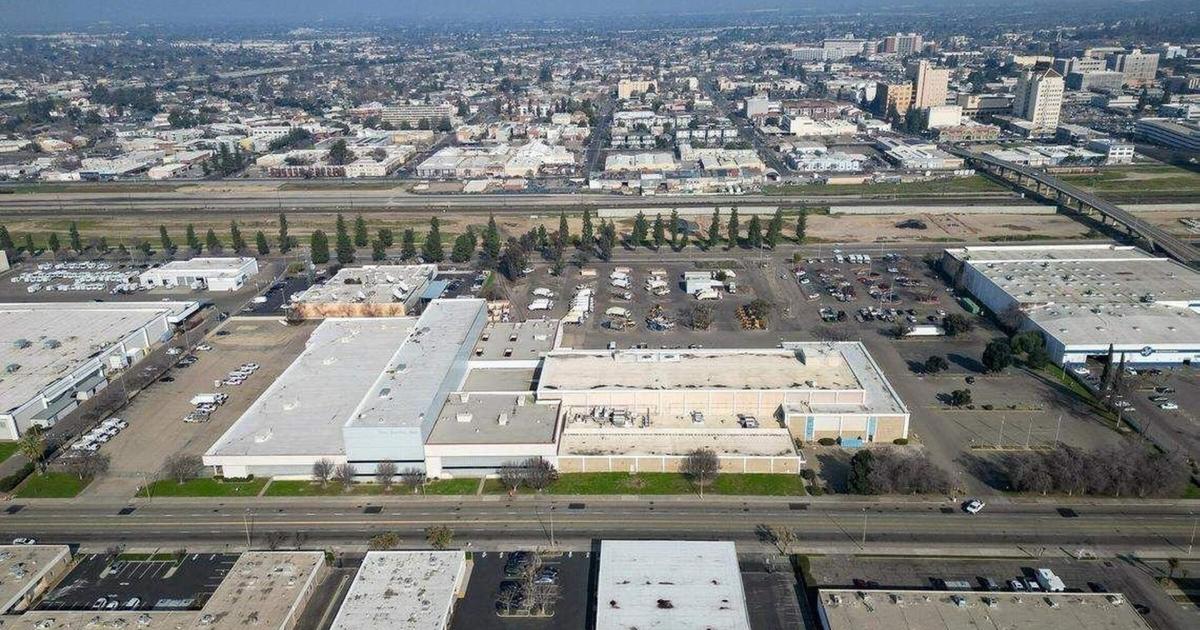
The author writes that the newspaper building where he once spent countless hours, the Fresno Bee in California (pictured), has become a relic, stripped of its value. The building is slated for demolition. (Craig Kohlruss / Fresno Bee / TNS)
Advocates for ideas and draws conclusions based on the interpretation of facts and data.
The author writes that the newspaper building where he once spent countless hours, the Fresno Bee in California (pictured), has become a relic, stripped of its value. The building is slated for demolition. (Craig Kohlruss / Fresno Bee / TNS)
For more than a century, newspapers were sustained by a simple business model: Readers paid for the product through subscriptions and advertisers paid to reach those readers. The incentives aligned, and newspapers — even in the smallest communities — could survive.
If a paper provided reliable information, covered local issues, and earned the trust of its readers, both circulation and advertising followed. Journalism was not just a public service; it was a viable business.
Then Big Tech swept in and captured the advertising dollars, and the business model began to crumble. Platforms like Google and Facebook built massive advertising businesses by aggregating audiences at a global scale.
The revenue that once funded local reporting did not disappear. It just flowed elsewhere.
In response, many news organizations have turned to charitable foundations and reader donations to fill the gap. That can work for a while. It can help launch new outlets, sustain investigative projects or keep struggling publications alive. But it raises a difficult question: Is it sustainable?
Donations are unpredictable. Foundations shift priorities. And a business built on voluntary support may never generate enough consistent revenue to hire more reporters, expand coverage and serve a community over the long term.
The deeper question is not just how to save journalism, but how to rebuild a model where journalism can sustain itself, and where news publishers don’t have to look over their shoulders, wondering when a major donor will move on to something else or spend down its endowment altogether.
That is what should worry young journalists. I started when newspapers were cash machines, and I could stay as long as editors wanted me — 48 years, in my case, in the news business I love. Today, journalists shouldn’t plan careers beyond the next five years — or until the next major grant dries up, because the news business is hand-to-mouth, always hoping for something beyond it.
Everything has changed. The old newspaper building where I once spent countless hours has become a relic, stripped of its value. The building at 1626 E St. in Fresno, Calif., is slated for demolition, its commercial worth vanished — even with the three-story press that once cost $45 million and, in 1976, represented the cutting edge of technology. What was once a bustling hub of industry and innovation will soon be little more than memories and dust.
So now we have entered an era where Americans scroll past headlines with skepticism, and local newsrooms shrink — or disappear entirely. Digital news outlets are springing up across the country, but they are tiny compared with the newspapers of the past. Mid-sized papers once employed 200 staffers; today’s digital counterparts often have only seven or eight journalists.
We must find ways to support local journalism, ensuring that our communities continue to have trustworthy, fact-based reporting that tells their stories. Without it, the voices and histories of our towns risk fading into silence.
The dangers of losing local newspapers go far beyond nostalgia or the disappearance of old buildings. For most people, local journalists are the lifeline to what truly happens in their communities. They are the ones sitting through long, often tedious school board meetings, asking tough questions at city council sessions and digging into how local tax dollars are spent. They highlight the everyday triumphs of local heroes, the struggles of ordinary families and the challenges that shape the neighborhoods we call home.
Without them, crucial decisions happen behind closed doors, beyond the scrutiny of the people they affect. Rumors and misinformation fill the void left by silence, and communities lose the shared knowledge and common narratives that help people understand one another. Local journalism doesn’t just report facts — it helps define the identity of a town, a city or a region. It holds power accountable, celebrates civic achievements and reminds us that our stories — and our voices — matter.
When local newspapers vanish, it’s not just pages of news that disappear. It’s a crucial thread of community life, a public square where citizens learn, debate and connect. Losing it is not merely an economic or cultural loss — it is a threat to the transparency, cohesion and informed participation that democracy relies on.
The stakes are rising everywhere. When institutions such as The Washington Post cut back, accountability suffers, but the deepest impact is often felt in local communities already facing news deserts.
Local philanthropy groups, foundations and journalists themselves are working urgently to raise money to sustain and rebuild local news. Through nonprofit models, community fundraising and new partnerships, they are fighting to preserve the reporting their communities depend on.
Yet despite their valiant efforts, today’s newsrooms remain a fraction of what they once were. The result is a profound imbalance: While communities still need strong local reporting, the financial foundation that sustained it for generations has been fundamentally eroded.
At the same time, even national institutions such as The Washington Post have cut back on parts of their commitment and capacity, creating gaps in coverage that weaken accountability. While there are still many talented reporters ready to do this essential work, the greatest need is not only at the national level but in our own backyards.
Across the country, local news deserts are expanding. These are communities with little to no original reporting on the issues that shape people’s daily lives. That is where we must put our energy.
Strong local journalism fosters accountability, strengthens civic engagement and helps residents make informed decisions. It connects neighbors, amplifies diverse voices and preserves the history of a place as it unfolds. When local news disappears, civic participation declines, polarization increases and public trust erodes.
Supporting local journalism means investing in the institutions and people who do this work — through subscriptions, philanthropy, public support and community partnerships. It means recognizing that local news is not just a business, but a public service essential to the health of our democracy.
If we want informed citizens, transparent institutions and connected communities, we must ensure that local journalism not only survives but thrives.
The pressing question is: What sustainable business model can support growing reporting and editing teams? Many smart people are working on this challenge, and I hope they find a solution soon. But right now there isn’t one single, proven model yet — at least not one that works broadly for local news.
Yakima Herald-Republic opinion section glossary
Editorials reflect the opinion of the newspaper’s editorial board and are meant to offer perspective, raise questions or advocate for change.
Though grounded in fact, editorials express opinions and are intended to spark thought and discussion.
Opinion columns represent the personal views of the writer, not the position of the newspaper.
While news articles aim to present facts without bias, opinion columns offer fact-based individual perspectives.
Your browser is out of date and potentially vulnerable to security risks.
We recommend switching to one of the following browsers:
Get up-to-the-minute news sent straight to your device.