By Sonny Lo Shiu Hing
The launch of a trial gold central clearing platform and a new tailored price ticker marks a pivotal infrastructure upgrade for the SAR
The move aligns with national economic planning while boosting offshore Renminbi internationalisation and regional market integration
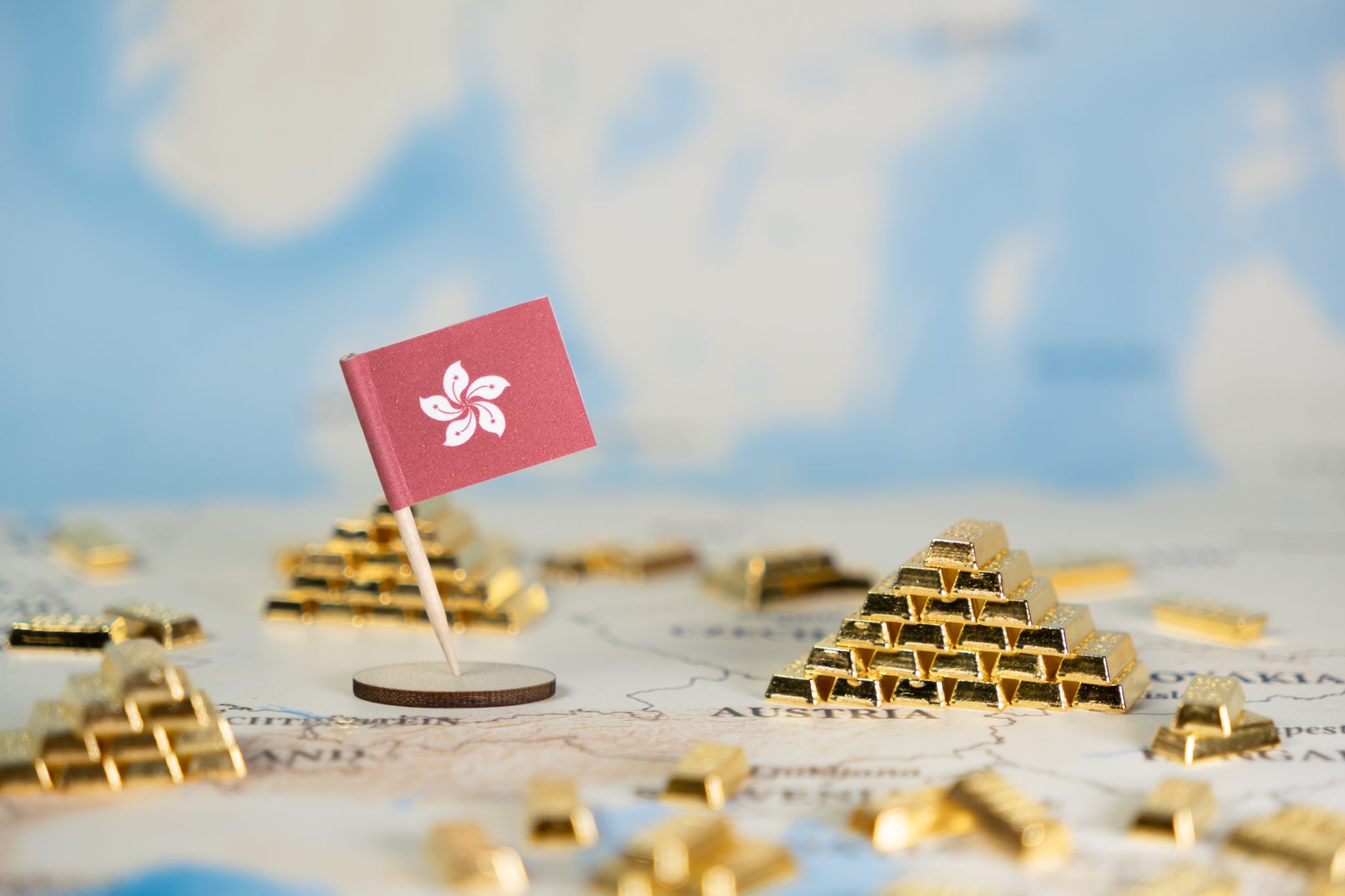
The launch of a gold central clearing and settlement system, which is conducted on a trial run basis, will have important implications for the development of the Hong Kong Special Administrative Region (HKSAR), especially since it is formulating the first five-year plan for the territory.
According to the Hong Kong government’s information, the gold central clearing and settlement system will be characterised by not only a move to roll out an initial stage of “Delivery Connect with the Shanghai Gold Exchange,” but also the inception of a new HAU price ticker designed to “furnish a specific reference rate tailored for Hong Kong” (Government Press Release, July 7, 2026).
There are plans to expand the gold storage capacity and refining capabilities, diversify gold investment products, explore the idea of using tax incentives, coordinate with insurance arrangements, consolidate the flexibility of Mandatory Provident Fund investments in gold exchange-traded funds, and institutionalise the formation of an industry-wide trade association.
Financial Secretary Paul Chan said explicitly that the National 15th Five-Year Plan has expressed its support for Hong Kong to establish a commodity trading ecosystem. By implication, the launch of the gold central clearing and settlement system in the HKSAR can be seen as a swift response from the local government to the central government’s planning and expectation. Chan remarked on July 7: “The commencement of the trial operation of the gold central clearing and settlement system today marks a significant step forward in developing Hong Kong’s gold trading infrastructure” (Government Press Release, July 7, 2026). He added that the gold trading ecosystem will enrich the depth and breadth of the financial markets in Hong Kong, generating more opportunities for local and overseas investment and opening another new chapter for the continuous prosperity of the financial sector.
Echoing Chan’s remarks, Secretary for Financial Services and the Treasury Christopher Hui added that the HKSAR government’s vision is to construct a “scalable” and yet “integrated” gold exchange platform with the capabilities in clearing, connectivity, price discovery, storage, risk management and insurance for both local and global investors and participants.
The new gold clearing and settlement system operates under Hong Kong Precious Metals Central Clearing Limited, which is a government-owned corporation, and it will be expected to deliver efficient and credible services for gold transactions. The operation is governed by a Clearing Rulebook, according to the government’s press release. A central ledger has been set up to record the activities of settlement, the transfer of gold, the balances of participative banks, and the facilitation of gold deposits and withdrawals. The eligible gold for settlement is composed of four-hundred-ounce fine troy bars that conform with international standards.
The repositioning and revitalisation of Hong Kong’s financial, monetary, capital and gold markets are an indispensable part of the Chinese Mainland’s planning and strategy of utilising the “two systems” in the “one country, two systems” to the full extent
Eleven banks have been involved in the gold clearing system, including the Agricultural Bank of China’s Hong Kong branch, ANZ, Bank of China (Hong Kong), China Construction Bank (Asia), Citi Hong Kong, ICBC (Asia), JPMorgan Chase, Standard Chartered Hong Kong, HSBC and UBS (South China Morning Post, July 8, 2026).
Chief Executive John Lee said at the Hong Kong FIC and Bond Connect Summit that the government-owned Hong Kong Precious Metals Central Clearing Limited will offer comprehensive gold services, and that the initial gold deposits and the first transaction settlements had already been completed (Hong Kong Standard, July 7, 2026). These settlements embraced many companies and their clients, ranging from mining companies to refiners, from jewellers to investors.
Lee emphasised that the establishment of the gold central clearing system is attributable to the support and collaboration among the Hong Kong government, the Shanghai Gold Exchange and the eleven financial institutions on the Central Clearing Limited Board.
The Chief Executive also remarked that the first phase of Delivery Connect was conducted in partnership with the Shanghai Gold Exchange, which is a streamlined platform for participants to use gold holdings to settle their transactions in Hong Kong and Shanghai markets (Hong Kong Standard, July 7, 2026). According to John Lee, three banks had already been participating in this Connect initiative and two-way transfer could be completed.
The Summit attended by John Lee witnessed the participation of Pan Gongsheng, the governor of the People’s Bank of China (South China Morning Post, July 8, 2026). He unveiled several policy enhancements, including a sixty per cent increase in the investment quota for the Bond Connect’s southbound segment and the diversification of the Chinese bonds products. These measures expand investment channels and can be seen as “gifts” from the central government to Hong Kong after the 29th anniversary of its return to the motherland. Pan added that the annual net investment quota under the Bond Connect scheme would be increased to eight hundred billion yuan from the current five hundred billion yuan. Moreover, China’s foreign exchange reserves will continue to increase their asset allocation in the HKSAR, thereby stimulating Hong Kong’s capital market development.
The Hong Kong Exchanges and Clearing has also revitalised its US dollar gold futures contract, and it is planning to develop a new yuan gold futures contract with the support from the Shanghai Gold Exchange. Furthermore, HAU as a new gold price ticker has been introduced in collaboration with Bloomberg for the purposes of gold trading and settlement in the HKSAR.
Strengthening Hong Kong as a super-connector for commodity trading
At the same time, the Hong Kong Monetary Authority’s chief executive Eddie Yue, witnessed the signing of a Memorandum of Understanding between the Hong Kong Exchange and Clearing Limited and the Cross-Border Interbank Payment System, which is a primary channel for cross-boundary yuan payments and clearing under the People’s Bank of China. This new understanding is economically significant, because it can accelerate the development of fixed income and currency in Hong Kong and consolidate the HKSAR’s role as a leading offshore Renminbi centre.
With the advancement of the Northern Metropolis, emphasising Artificial Intelligence and scientific research, alongside the establishment of a new gold clearing and settlement centre, Hong Kong is strategically repositioning itself as a dynamic, adaptive, collaborative, and competitive city, both within Asia and globally
The establishment of the new gold central clearing and settlement system has important implications for the HKSAR and its relations with the central government, both economically and politically.
First, economically, Hong Kong’s financial and capital markets are consolidated further, offering a variety of products for overseas investors. It was reported that the government aims at expanding the gold storage capability to two thousand tonnes and to enhance cross-boundary physical gold settlement. As such, gold transactions will help Hong Kong consolidate and expand its status as one of the world’s important financial, monetary and even gold centres.
Second, the establishment of the gold clearing and settlement system is going to reposition Hong Kong as a super-connector linking with the Shanghai Gold Exchange. If Hong Kong is already a premier offshore Renminbi transaction centre for the central government in Beijing, the transactions of gold and Renminbi will be naturally accelerated.
Third, from the perspective of the political economy of development, if Hong Kong’s financial and monetary system remains an important modernisation window of China to the outside world, the addition of the gold centre is going to strengthen Hong Kong’s economic usefulness to the Chinese Mainland.
Maximising comparative advantages under one country two systems
In other words, the HKSAR remains and will remain a crucial economic conduit for China to accelerate its Renminbi internationalisation, to expand its gold transactions internationally, and to strengthen its Belt and Road Initiatives through the utilisation of financial, capital and gold platforms in Hong Kong.
Fourth, as mentioned explicitly by Paul Chan, the launch of the gold clearing and settlement system in Hong Kong speaks to the central government’s Five-Year Plan, which expects more economic contributions from the HKSAR and which hopes that Hong Kong can expand its commodity trading ecosystem. By implication, the “one country, two systems” of Hong Kong is going to prosper further by fully utilising the comparative advantages of the HKSAR’s legal system, financial and monetary centre, and the newly established gold clearing and settlement centre.
Fifth, in recent years, as the central government has been encouraging the HKSAR to play a more proactively external role, like the establishment of the International Organisation for Mediation and the visits of the HKSAR leaders to foreign countries in Central Asia and the Middle East to seek foreign direct investment, it is clear that Beijing has been unleashing the legal and economic potential of Hong Kong to the full extent. In other words, the market-led economic system in Hong Kong’s “one country, two systems” is being utilised by the central government to connect the HKSAR with both the external world and internal Chinese cities, such as Shanghai Gold Exchange in the case of the establishment of Hong Kong’s gold clearing and settlement centre. The objective of strengthening Hong Kong’s “external connections and internal communications” can be achieved by the establishment of this new gold centre in the HKSAR.
Sixth, the setting up of this new gold centre will strengthen Hong Kong’s economic competitiveness in the Asia Pacific region. The status of Hong Kong as a global financial hub will be consolidated. Old debates over Hong Kong and Shanghai competing have ended. Instead, Shanghai and Hong Kong have been collaborating well in the establishment and operation of the Hong Kong gold clearing and settlement system. With the advancement of the Northern Metropolis, emphasising Artificial Intelligence and scientific research, alongside the establishment of a new gold clearing and settlement centre, Hong Kong is strategically repositioning itself as a dynamic, adaptive, collaborative, and competitive city, both within Asia and globally.
Seventh, it is crystal clear that it is in the interest of the Chinese Mainland to maintain the “one country, two systems” in Hong Kong. Foreign critics of the “one country, two systems” have unduly focused on the political aspect of development, but they have neglected a dialectical development in the HKSAR: on the one hand, its political development has to be reshaped and realigned with the national security needs of the central government, but on the other hand, its market-led and increasingly better planned economy is playing a crucial role for China’s persistent economic modernisation and internationalisation of yuan.
In conclusion, the establishment of Hong Kong’s gold clearing and settlement system is economically and politically significant. Economically, Hong Kong’s role as a global financial centre is going to be strengthened further. Its economic competitiveness in Asia and the world is expected to be buttressed; the gold clearing and settlement system is part of the more comprehensive planning of Hong Kong amid the central government’s Five-Year Plan.
The new gold clearing system is part and parcel of the Hong Kong repositioning strategy, which embraces other aspects, including the faster development of the Northern Metropolis with Artificial Intelligence and scientific research as its foci, the establishment of the International Organisation of Mediation with the usage of Hong Kong’s common-law advantage for the Chinese Mainland to strengthen its legal relations with countries along the Belt and Road Scheme, and the central encouragement of Hong Kong’s leaders to reach out to Middle East, European and Central Asian countries to expand the HKSAR’s soft power.
Clearly, the repositioning and revitalisation of Hong Kong’s financial, monetary, capital and gold markets are an indispensable part of the Chinese Mainland’s planning and strategy of utilising the “two systems” in the “one country, two systems” to the full extent, especially as the HKSAR remains market-led amid a better planned government, and as China remains a state-led socialist economy with incremental but cautious marketisation.
*Sonny Shiu-Hing Lo is a political scientist, veteran commentator, and author of numerous books and academic articles on Hong Kong, Macau, and Greater China. He is also an honorary professor in the Department of Politics and Public Administration at the University of Hong Kong.
Over 30 countries across North and South America agreed Friday to bolster joint efforts against organized crime at a summit in the Peruvian city of Cusco.
Indonesia’s top anti-corruption prosecutor resigned on Saturday, the Attorney General’s Office said, after police investigating graft cases seized millions of dollars in cash and gold bars from properties including his home.
Macau’s casino industry suffered its toughest quarter since reopening, with earnings dragged down by “bad luck” at VIP tables and distractions from the global soccer tournament, Citi Research said in a dispatch.
Chief Executive Sam Hou Fai has called on all government departments to reinforce coordination and assume full responsibility in identifying and addressing potential risks to ensure a rapid and efficient response to emergencies, public broadcaster TDM reported. Presiding over a high-level meeting on summer security and disaster response, Sam demanded a clear division of responsibilities […]
n a time of an inflection point for how this industry will change, we need to re-set our understanding of AI. AI can mimic techniques, but it cannot counterfeit the human soul.
UTM Comments is a partnership between Macau News Agency and Macao University of Tourism A look at innovation vs. authenticity By Jerome Keong Lecturer, Macao University of Tourism The culinary world has inevitably arrived at a gastronomical crossroads. Fusion cooking, once seen as a niche experimental platform, is now considered a conventional type of cuisine embraced […]
UTM Comments is a partnership between Macau News Agency and Macao University of Tourism By Hilda, Fok Hio Fong Lecturer, Macao University of Tourism When Brad Pitt and his fellow cast members from the F1 movie sat down last year for an interview, the conversation quickly shifted from their film to something very different indeed. Smiling, […]
UTM Comments is a partnership between Macau News Agency and Macao University of Tourism By Veronica, Lam Iok Keng Assistant Professor, Macao University of Tourism Online shopping has trained consumers to compare prices and chase deals. That habit now carries into travel. Many young people opt for budget trips. Influencers speak to audiences with tight wallets […]
Leading business news and insights from Macau, covering gaming, finance, tourism, and economic developments.
© 2026 Macau Business. All rights reserved.